

Tokenization can make traditional securities easier to transfer, integrate into digital platforms, and interact with blockchain-based infrastructure. But the presence of a stock-like token in a digital wallet does not necessarily mean the holder owns the underlying shares or receives the same rights as a conventional shareholder.
This distinction is becoming increasingly important as digital asset markets develop more sophisticated forms of tokenized securities.
Two assets can appear remarkably similar on-chain while representing fundamentally different legal and economic relationships. An issuer-native security token, a wrapped security, a linked instrument, and a security-based synthetic exposure may all reference the same underlying company.
Yet their holders could have very different rights concerning ownership, voting, corporate information, dividends or distributions, transfer, and insolvency.
For investors evaluating tokenized securities, the key question is therefore not simply what the token represents economically. It is what legal claim the token actually creates.
The Token Is Not Necessarily the Share
A traditional share represents a defined interest in a company under the applicable corporate and securities framework. Depending on the security and jurisdiction, shareholders may have rights connected to voting, distributions, corporate information, and claims during specified corporate events.
Tokenization can place a digital representation of an interest into a blockchain environment, but the technical representation does not automatically determine the legal rights attached to it.
This creates an important distinction.
A token could represent:
- The actual underlying security
- A legally recognized digital version of the security
- A claim against an intermediary holding the security
- A contractual right linked to the security’s value
- Synthetic exposure designed to track the security
- Another structure that references the same underlying asset
These arrangements can produce similar price movements while creating very different relationships between the holder and the underlying issuer.
For that reason, investors should examine the legal structure behind a tokenized stock rather than relying on its name, ticker, or appearance within a wallet.
Issuer-Native Securities Can Create a More Direct Relationship
An issuer-native tokenized security is generally designed to represent the security directly within the issuer’s or authorized infrastructure.
The important question is whether the token itself constitutes the legally recognized security or represents a legally enforceable interest recorded through the relevant system.
Where the structure establishes direct ownership, investors may have rights associated with the underlying security, subject to the applicable legal and operational framework.
These could include voting rights, corporate actions, information rights, and claims associated with ownership.
However, even issuer-native structures require careful examination.
Investors should understand:
- Who legally recognizes the holder?
- Where is ownership recorded?
- Which entity maintains the official register?
- How are corporate actions processed?
- What happens if the token is transferred?
- What legal framework governs ownership?
Blockchain-based settlement does not remove these questions.
Instead, it can introduce a new layer of infrastructure that investors need to understand.
Wrapped Securities Introduce Another Layer
A wrapped security can look almost identical to an underlying stock from a market-exposure perspective.
However, the token may represent a claim connected to an intermediary rather than direct ownership of the underlying security.
For example, an intermediary could hold conventional shares while issuing tokens designed to represent an interest linked to those shares.
The investor may therefore hold the token rather than the underlying stock itself.
That distinction can become important during corporate events.
Does the token holder have direct voting rights?
Does the intermediary vote on behalf of holders?
Are dividends passed through automatically?
What happens if the intermediary fails?
What happens if the underlying shares become inaccessible?
These questions demonstrate why tokenized securities need to be evaluated at the legal and structural level rather than solely through their market behavior.
Linked Instruments Can Provide Exposure Without Ownership
Another structure involves an instrument whose value is linked to the performance of a stock without giving the holder direct ownership of that stock.
This can provide economic exposure while separating the investor from the underlying corporate rights.
The distinction is particularly important because economic exposure and legal ownership are not necessarily the same thing.
An investor could potentially receive an economic return connected to a company’s share price while having no ability to vote at shareholder meetings or directly request information from the issuer.
The instrument may instead establish contractual rights against the entity that issued or structured the product.
That means investors need to identify who owes them the obligation represented by the token.
The answer may not be the company whose stock the token tracks.
Synthetic Exposure Creates an Even Greater Distinction
Security-based synthetic exposure can resemble tokenized ownership without actually representing ownership of the underlying security.
A synthetic structure may be designed to track the price or economic performance of a stock through contractual arrangements, derivatives, collateral, or other mechanisms.
From a wallet perspective, the result may look simple.
The investor holds a token.
The token has a price.
The price moves alongside a familiar publicly traded company.
But the legal relationship can be substantially different.
The investor may have a contractual claim rather than a shareholder interest.
This difference becomes particularly relevant during periods of stress.
If the issuer or intermediary experiences financial difficulties, the holder’s position may depend on the contractual structure, collateral arrangements, applicable insolvency law, and priority of claims.
Voting Rights Cannot Be Assumed
Voting rights are one of the clearest examples of how tokenized exposure can differ from conventional ownership.
Owning an asset that tracks a company’s stock price does not automatically make the holder a shareholder.
Even where the underlying shares are held by an intermediary, voting arrangements may vary.
Possible structures could involve:
- Direct voting by the token holder
- Voting through an intermediary
- Delegated voting
- Limited voting rights
- No voting rights
The existence of a token therefore does not answer the question.
Investors need to examine the governing documents and understand precisely how voting rights are established and exercised.
Information Rights Also Matter
Shareholders may have access to information through corporate reporting, shareholder communications, and other applicable disclosure mechanisms.
A token holder may not necessarily receive the same treatment.
Depending on the structure, information could be provided by:
- The underlying issuer
- A custodian
- An intermediary
- A platform
- The token issuer
The quality, timing, and legal basis for that information may differ.
This makes information rights an important part of evaluating tokenized securities.
Investors should ask not only whether information is available, but who is responsible for providing it and what rights support that access.
Dividends and Corporate Actions Need Examination
Economic distributions create another potential point of difference.
If the underlying stock pays a dividend, the treatment of a tokenized representation could depend on its structure.
The holder might receive the distribution directly, receive a corresponding contractual payment, have the amount reflected in the token’s economics, or have a different arrangement entirely.
Other corporate actions can create additional complexity.
Stock splits, mergers, tender offers, rights offerings, and other events may require the token structure to interact with the underlying securities infrastructure.
Investors should therefore understand how corporate actions are handled before assuming that tokenized exposure will function exactly like conventional share ownership.
Insolvency Can Reveal the Real Structure
Perhaps the most important question emerges when something goes wrong.
A token’s market value during normal conditions does not necessarily reveal the strength of the holder’s legal claim.
If an intermediary, custodian, platform, or token issuer becomes insolvent, the investor may need to determine:
- Who legally owns the underlying shares?
- Are assets segregated?
- What claim does the token holder possess?
- Is the claim secured or unsecured?
- Which entity owes the obligation?
- How are assets treated during insolvency?
- What jurisdiction governs the arrangement?
These questions can materially affect outcomes.
This is why investors should not evaluate tokenized securities solely through their trading price or blockchain architecture.
The legal claim behind the token can matter just as much.
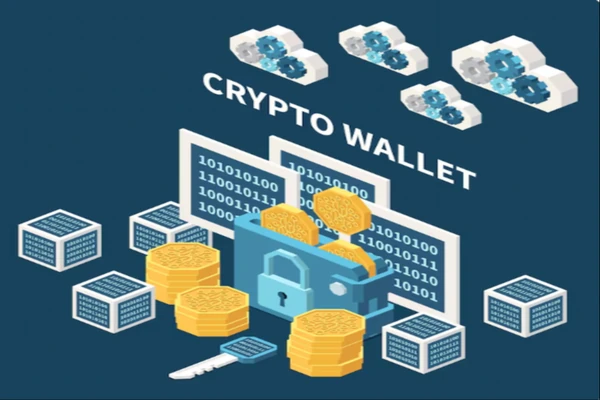
A Wallet Does Not Explain the Entire Investment
Blockchain technology can make ownership records, transfers, and settlement more visible and programmable.
However, a wallet balance does not necessarily reveal the complete legal structure behind an asset.
The same wallet interface could potentially display:
- A directly issued digital security
- A token backed by custodially held shares
- A contractual instrument
- A synthetic product
- A token linked to another financial asset
The interface may make these instruments appear similar.
Their rights may not be.
This is why investors evaluating tokenized securities should look beyond the token itself and examine the underlying documentation, ownership structure, issuer relationship, custody arrangements, and applicable legal framework.
Questions Investors Should Ask
Before evaluating a tokenized stock, investors can consider several fundamental questions:
1. What exactly does the token represent?
2. Does it constitute direct ownership of the underlying security?
3. Who is legally recognized as the owner?
4. Where is ownership recorded?
5. Does the holder have voting rights?
6. What information rights does the holder receive?
7. How are dividends and corporate actions handled?
8. Who is responsible for maintaining the underlying asset?
9. What happens if the intermediary becomes insolvent?
10. Can the token be redeemed for the underlying security?
11. What restrictions apply to transfers?
12. Which jurisdiction governs the holder’s rights?
The answers can reveal whether an asset provides direct ownership, indirect exposure, or a contractual relationship tied to the underlying security.
The Kenson Perspective
Kenson Investments approaches tokenized securities by looking beyond the digital representation to the structure supporting it. A token’s appearance, tradability, or connection to a recognizable stock does not by itself establish the rights associated with ownership.
Understanding whether an instrument provides direct ownership, an intermediary claim, linked exposure, or synthetic exposure is essential when evaluating governance, information access, corporate actions, insolvency treatment, and associated risks.
As tokenization continues to develop across financial markets, professionals at the digital asset management consultancy believe investors should examine the legal and operational infrastructure behind a digital security rather than treating every stock-linked token as equivalent to the underlying share.
Register now to discuss tokenized securities, digital asset structures, ownership considerations, and the associated risks that can arise when traditional securities move onto digital infrastructure.
About the Author
The author specializes in digital asset market structure, tokenization, and financial infrastructure developments. Their research focuses on how emerging blockchain-based investment products interact with traditional ownership frameworks, governance rights, custody arrangements, and regulatory requirements. They examine the operational, legal, and market considerations that influence investor outcomes as tokenized securities continue to evolve across global financial markets.
